
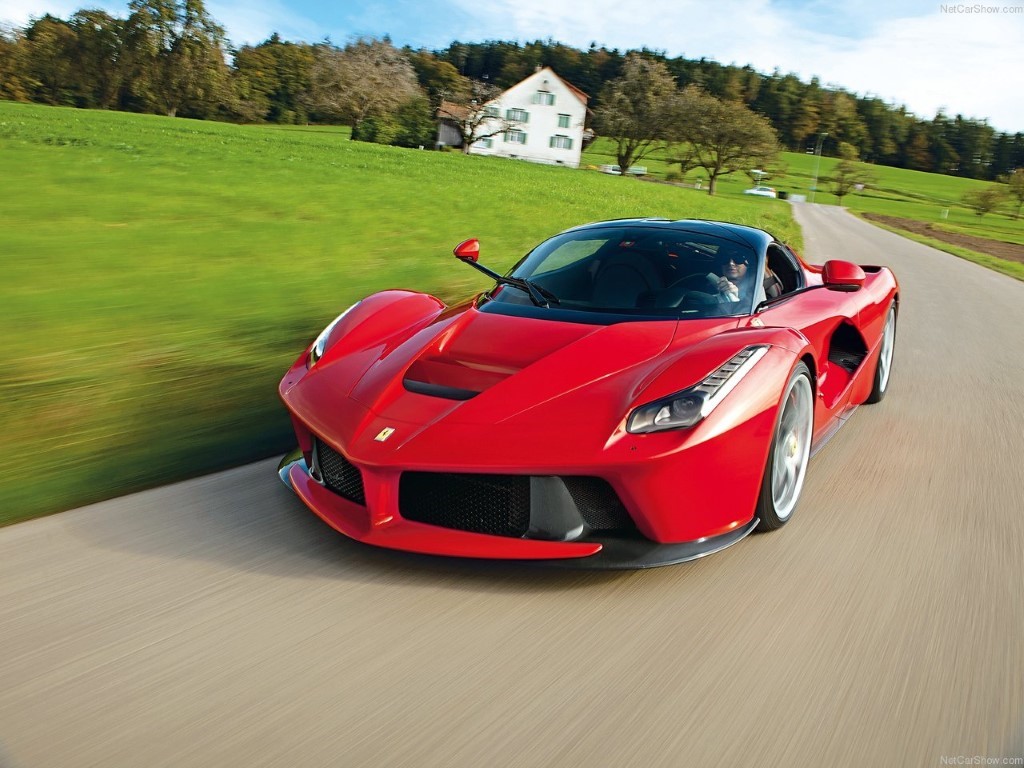
1st Generation
(2013 - 2016)
6.3 V12 Hybrid (HY-KERS)
963 cv
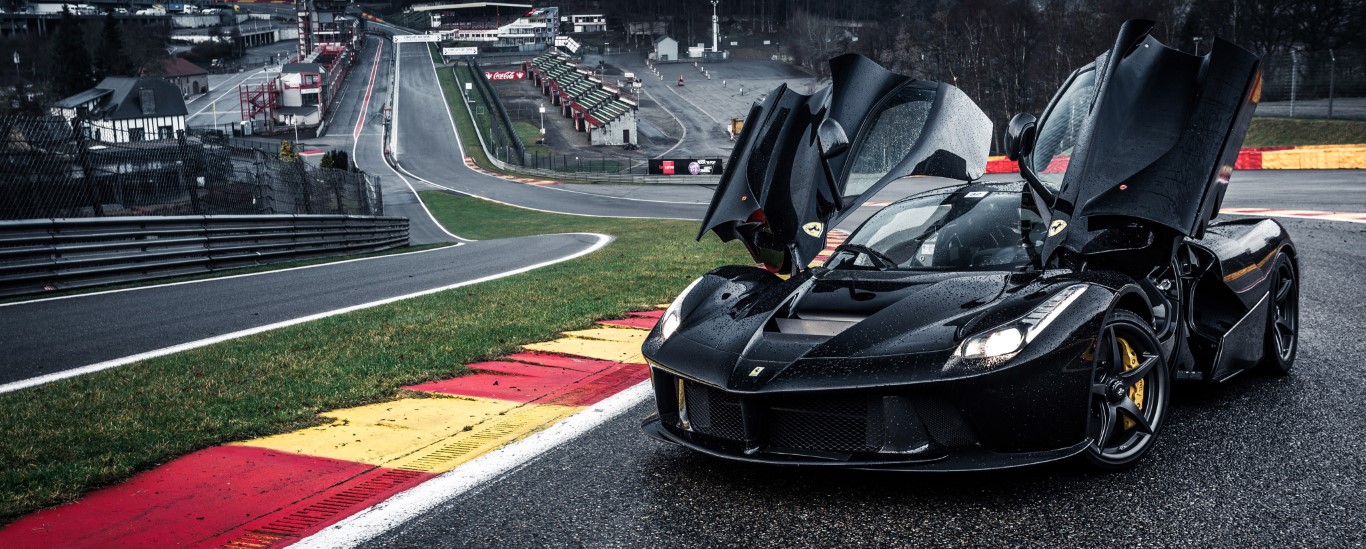
Technical specifications, versions, and history for the Ferrari LaFerrari.
Select a generation to see available versions
(2013 - 2016)
The history of the Ferrari LaFerrari begins where that of the legendary Ferrari Enzo ended. Launched in 2002, the Enzo set a new standard for supercars in the 21st century, but a decade later, automotive engineering had evolved drastically. The mission of its successor, known internally by the project name F150, was monumental: to create not only the fastest and most technologically advanced road car in Maranello's history, but also to redefine what a hypercar could be. The result was a vehicle that represented the pinnacle of Ferrari's innovation, integrating for the first time hybrid technology derived directly from Formula 1 tracks into a production car.
The chosen name, "LaFerrari", which translates from Italian as "The Ferrari", was a bold and intentional statement. It was not just a name, but the very definition of the car's mission. At a time of technological transition, with the introduction of a hybrid system that could be viewed with skepticism by purists, Ferrari asserted that this model was the definitive expression of its identity, encapsulating all its history, passion, and technical capability. The choice of the name communicated that, despite the new technology, this was the purest and most authentic manifestation of the brand, ending any debate about the "dilution" of the driving experience. It was an assertion that the future of Ferrari began there.
The stage for this revelation was the 2013 Geneva Motor Show. The launch marked a turning point for the brand, presenting to the world its first production car equipped with the HY-KERS hybrid propulsion system. The LaFerrari was not presented as a mere automobile, but as a meeting point between a street sports car and a Formula 1 single-seater, a fusion of two worlds that previously seemed distant.
The core of the LaFerrari is a masterpiece of engine engineering. The combustion powertrain is an evolution of the F140 family, a naturally aspirated 6,262 cc (6.3 L) V12, positioned longitudinally in the mid-rear part of the car. This engine, codenamed F140FE, was optimized to deliver 800 hp at an impressive 9,000 rpm, with a rev limit of 9,250 rpm. At the time of its launch, it was the most powerful naturally aspirated V12 engine ever installed in a Ferrari road car. The maximum torque of the combustion engine reaches 700 Nm at 6,750 rpm, ensuring a visceral response and an unmistakable soundtrack.
Complementing this V12 is the HY-KERS (Kinetic Energy Recovery System) system, a technology transplanted directly from Formula 1. It consists of an electric motor that adds 120 kW (163 hp) to the setup. Crucially, the system was not designed for purely electric driving or for maximum fuel efficiency; its sole purpose is performance. During braking, the system recovers kinetic energy that would be wasted and stores it in a 60 kg lithium-ion battery pack, hand-assembled by Scuderia Ferrari itself. This energy is then released to fill the torque gaps at lower revs and provide a continuous power boost, eliminating any hesitation and ensuring relentless acceleration.
The synergy between the two engines results in a combined total power of 963 hp and a torque exceeding 900 Nm. All this force is managed by a 7-speed dual-clutch transmission (DCT) and sent exclusively to the rear wheels, maintaining the brand's drivability tradition.
The foundation of the LaFerrari is a carbon fiber monocoque chassis, developed in an unprecedented collaboration between the road car (GT) engineers and the Formula 1 team. To optimize rigidity and minimize weight, four different types of carbon fiber were used, each hand-applied to specific areas of the structure. The result was a 27% increase in torsional rigidity and a 22% increase in structural rigidity compared to the already impressive Ferrari Enzo, all this while accommodating the additional weight of the hybrid system.
The aerodynamics are equally advanced, being one of the pillars of the car's performance. The LaFerrari features an active aerodynamic package, with moving components that automatically adjust to optimize downforce in corners or minimize drag on straights. This includes front and rear diffusers, as well as a retractable rear wing, all integrated into the vehicle's dynamic control systems. The bodywork design was sculpted in a wind tunnel, with every line and air intake serving a functional purpose, whether to generate downforce or to cool the powerful mechanical components.
For the first time since the Dino 308 GT4 of the 1970s, the design was not signed by the famous Pininfarina studio, but rather developed internally by the Ferrari Styling Centre, under the leadership of Flavio Manzoni. Inspiration came from classic Ferrari racing prototypes, such as the 330 P4 and the 312P, resulting in a low and aggressive profile, with muscular fenders and a compact cabin. Inside, the F1 philosophy continues: the driving position is fixed to centralize the driver's mass. Instead of adjusting the seat, the steering wheel and the pedal box move to suit the driver, creating perfect ergonomics for high-performance driving.
The performance numbers of the LaFerrari Coupé are a testament to its superior engineering:
More than just straight-line numbers, the LaFerrari proved its capability on Ferrari's private test track in Fiorano. It completed a lap in less than 1 minute and 20 seconds, being over 5 seconds faster than its predecessor, the Enzo — a generational performance leap. To control all this power, the car is equipped with Brembo carbon-ceramic brakes, a third-generation electronic differential (E-Diff 3), F1-Trac traction control integrated with the hybrid system, and an active magnetorheological suspension that adjusts in milliseconds.
From the beginning, Ferrari announced that the production of the Coupé would be strictly limited to 499 units, destined for a select group of loyal customers, handpicked by the brand itself. With a launch price of approximately 1.4 million dollars, all units were sold before the car was even presented to the public.
In 2016, a remarkable story added a chapter to the LaFerrari saga. Following the devastating earthquakes that struck central Italy, Ferrari decided to produce an extra 500th unit, breaking its own production rule. This car, unique and with exclusive details such as a small Italian flag on the hood, was created for a noble purpose: to be auctioned off to raise funds for the victims. The auction was a resounding success, with the car fetching 7 million dollars, making it the most valuable 21st-century vehicle ever sold at auction up to that date.
This charitable act was also a masterclass in how to manage the value of an asset. By creating artificial scarcity with 499 units, Ferrari had already guaranteed a high resale value. The production of the 500th unit for a charity auction not only generated immensely positive publicity, but the record result publicly established a spectacular market price for the model. This instantly elevated the perceived and real value of the other 499 units, rewarding the loyal customers who had originally purchased the car and solidifying the LaFerrari's status as a blue-chip investment.
To celebrate its 70th anniversary, Ferrari gifted the world the LaFerrari Aperta, the convertible version of its hypercar. The word "Aperta" means "Open" in Italian, and the model was designed for the most passionate clients who desired the LaFerrari driving experience with the added sensation of the wind and the unfiltered sound of the V12.
The biggest technical challenge in creating the Aperta was removing the roof without compromising the structural integrity and performance of the coupé. Convertible cars are, by nature, heavier and less rigid. However, Ferrari committed to delivering an uncompromised experience. To achieve this, Maranello's engineers made significant modifications to the carbon fiber chassis to maintain exactly the same levels of torsional rigidity and structural rigidity as the closed version.
The aerodynamics were also extensively reworked. The goal was to ensure that the Aperta had the same drag coefficient as the coupé, even with the roof removed, so that the performance numbers remained identical. This engineering feat is remarkable and demonstrates the superiority of the original chassis design. The ability to keep performance intact elevates the Aperta from a simple "roofless version" to an equally valid engineering variant, justifying its exclusivity and even higher price tag.
The Aperta was offered with two removable roof options: a carbon fiber hardtop and a soft-top canvas for greater practicality. A small, but curious, difference compared to the coupé is the door rotation system, which, when fully opened, sits at a slightly different angle.
The production of the Aperta was even more exclusive. Initially, 200 units were planned, all sold by invitation to a select group of customers before the car's official presentation at the 2016 Paris Motor Show.
Following the tradition established with the coupé, an extra unit, number 210, was produced to be auctioned for charity. At an event celebrating the brand's 70th anniversary, this example was sold for an impressive 8.3 million euros (about 30.6 million reais at the time), with the proceeds going to the Save the Children organization. The figure once again broke the record for the most expensive 21st-century car sold at auction, surpassing the feat of its coupé sibling. With this, the official total production of the LaFerrari Aperta was 210 units.
The FXX-K represents the ultimate evolution of the LaFerrari platform, developed for Ferrari's exclusive "XX Programme". This research and development program allows a select group of clients to act as test drivers, providing valuable data for the development of future cars for the brand. The FXX-K is not homologated for official competitions or for use on public roads; its existence is purely for the track events organized by Ferrari. The "K" in its name is a direct reference to the KERS system, which is the heart of its enhanced performance.
To transform the LaFerrari into the FXX-K, the total power of the hybrid system was raised to 1,050 hp. The 6.3-liter V12 engine was reworked to produce 860 hp, while the electric motor was upgraded to generate 190 hp. The combined maximum torque remained above 900 Nm. The car also received a radical aerodynamic package, with a fixed twin-profile rear wing and a prominent front splitter, generating 50% more downforce than the road-going LaFerrari. To manage this performance on the track, the Manettino on the steering wheel was modified to offer four specific modes: Qualify (maximum performance for a limited number of laps), Long Run (consistent performance for longer stints), Manual Boost (instant delivery of maximum torque), and Fast Charge (rapid battery recharge).
Launched in 2017, the FXX-K Evo is not an entirely new model, but rather an aerodynamic evolution package, available as an upgrade for existing FXX-K cars or as an extremely limited number of newly built cars. The primary focus of the Evo was to take aerodynamics to a level comparable to that of professional racing cars.
With a new fixed twin-profile rear wing, a central fin, and a redesigned underbody, the FXX-K Evo generates 23% more downforce than the standard FXX-K and an impressive 75% more than the road-legal LaFerrari. At 200 km/h, the car produces 640 kg of downforce, a number that climbs to over 830 kg at its top speed. This massive aerodynamic load provides cornering grip and stability levels akin to those of racing cars in the GT3 and GTE categories, offering the purest and most extreme driving experience that a Ferrari client can have.
Production of the FXX-K was limited to just 40 units. The exact number of Evo packages or new Evo cars sold was not disclosed, being described only as "extremely limited".
The ownership model of the XX Programme is unique. The owners do not take the cars home. Instead, the vehicles are maintained and prepped by Ferrari itself in Maranello. The company transports the cars to exclusive track events around the world, where the owners can drive them with the full support of Ferrari's team of engineers and mechanics, as if they were factory drivers. This business model transcends the simple sale of a product. It creates a closed ecosystem that guarantees recurring revenue and unwavering loyalty. The client pays for the car and then continues to invest to participate in the events, storage, and maintenance. In return, they become part of an ultra-exclusive club, contributing directly to the future of Ferrari. The launch of the Evo package functions as real-world "downloadable content", encouraging owners to reinvest to keep their cars at the cutting edge of technology, keeping the program constantly relevant and exciting.
The LaFerrari did not arrive in the world alone. Its launch coincided with that of two other hybrid hypercars that defined an era: the McLaren P1 and the Porsche 918 Spyder. Together, they formed what the press and enthusiasts dubbed "The Holy Trinity" of hypercars, each representing the pinnacle of its respective brand's technology.
Despite sharing the concept of hybrid propulsion, each of the three cars followed a distinct engineering philosophy, resulting in unique driving experiences.
Ferrari LaFerrari: Represented the most purist approach. Its primary focus was the sensory experience of the naturally aspirated V12 engine, with the hybrid system acting as a performance enhancer (filling torque gaps) rather than an efficiency system. With rear-wheel drive and the highest horsepower rating (963 hp), it was the celebration of Ferrari's tradition, supercharged by the technology of the future.
McLaren P1: Utilized a twin-turbo V8 engine combined with an electric motor, focused on brutal power delivery and aggressive aerodynamics, including a "race mode" that lowered the car and extended a massive rear wing. Also featuring rear-wheel drive, it was the most visceral and challenging machine of the trio.
Porsche 918 Spyder: It was the most technologically complex. With a naturally aspirated V8 engine and two electric motors (one on each axle), it featured all-wheel drive (AWD). It was a plug-in hybrid, capable of running in pure electric mode. Being the heaviest, it compensated with the highest torque and the fastest 0 to 100 km/h acceleration, thanks to its superior traction.
In the context of this rivalry, the LaFerrari stood out as the guardian of tradition. While Porsche embraced hybrid complexity and McLaren the turbos, Ferrari used electricity almost "invisibly", as a support for its V12. The absence of an electric mode and the total focus on the combustion engine's performance positioned the LaFerrari as the "purist's choice" within the trinity, offering the most advanced technology in service of the most traditional experience: the sound and response of an Italian V12 at high revs.
| Metric | Ferrari LaFerrari | McLaren P1 | Porsche 918 Spyder |
|---|---|---|---|
| Combustion Engine | 6.3 L V12 NA | 3.8 L V8 Twin-Turbo | 4.6 L V8 NA |
| Combined Power | 963 hp | 916 hp | 887 hp |
| Combined Torque | >900 Nm | 900 Nm | 1,280 Nm |
| Drivetrain | Rear (RWD) | Rear (RWD) | All-Wheel (AWD) |
| Dry Weight | ≈1,255 kg | 1,395 kg | 1,634 kg (DIN) |
| 0-100 km/h (approx.) | <3.0 s | 2.8 s | 2.5 s |
| Units Produced | 500 (Coupé) | 375 | 918 |
With a starting price of around 1.4 million dollars, the LaFerrari proved to be an exceptional investment. Shortly after its launch, used units were already being advertised for values reaching 5 million dollars. Charity auctions set records that solidified its status (7 million dollars for the Coupé 500 and 8.3 million euros for the Aperta 210). To this day, values in auctions and private sales remain in the multi-million dollar range, confirming the LaFerrari as one of the most collectible and desired cars in the world.
The legacy of the LaFerrari is profound and multifaceted. It not only succeeded the Enzo with mastery, but also proved that hybrid technology could be used to heighten emotion and performance, rather than just focusing on efficiency. The innovations of the HY-KERS system, active aerodynamics, and carbon fiber construction were subsequently applied to later Ferrari models, such as the SF90 Stradale, shaping the future of the brand.
The LaFerrari holds a special place in automotive history. It represents the apex of the naturally aspirated V12 hypercar era, enhanced by the technology that would define the following decade. It is the perfect bridge between Maranello's tradition and inevitable electrification, ensuring its place as one of the most important, influential, and revered cars ever produced.
| Specifications | LaFerrari Coupé | LaFerrari Aperta | FXX-K | FXX-K Evo |
|---|---|---|---|---|
| Production Years | 2013–2016 | 2016–2018 | 2015–2017 | 2017–2019 |
| Combustion Engine | 6.3 L V12 | 6.3 L V12 | 6.3 L V12 | 6.3 L V12 |
| V12 Power | 800 hp | 800 hp | 860 hp | 860 hp |
| Electric Power | 163 hp | 163 hp | 190 hp | 190 hp |
| Total Power | 963 hp | 963 hp | 1,050 hp | 1,050 hp |
| Total Torque | >900 Nm | >900 Nm | >900 Nm | >900 Nm |
| 0-100 km/h | 3 s | 3 s | ≈2.6 s | ≈2.6 s |
| Top Speed | >350 km/h | >350 km/h | N/A (Track focused) | N/A (Track focused) |
| Units Produced | 500 | 210 | 40 | Package/Limited |